blog, Plant Care
Deer-Proofing Your Landscape: How to Keep Deer Out of the Garden
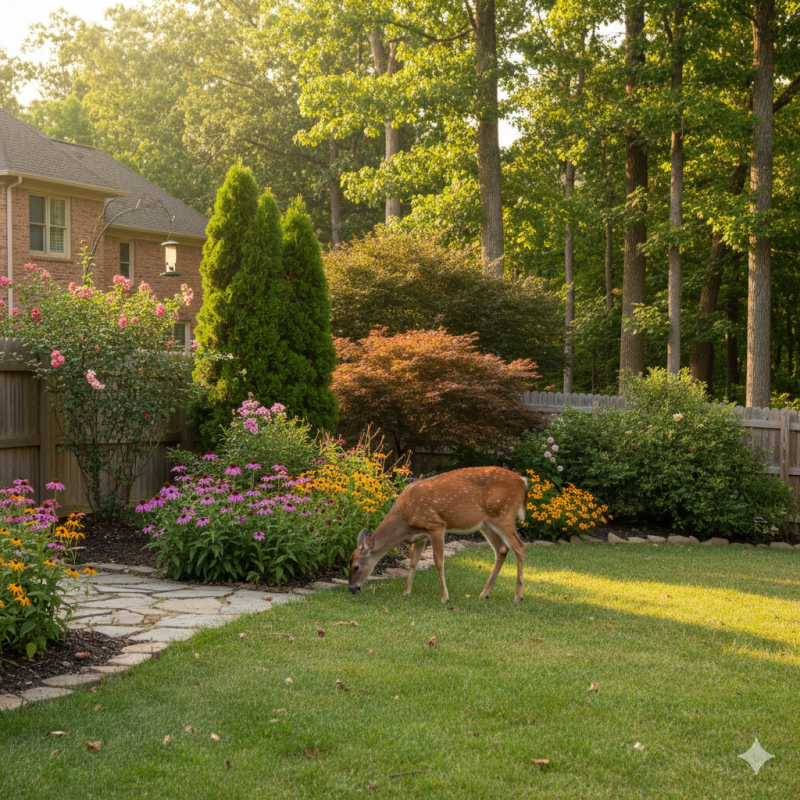
Deer are beautiful to watch from afar, but when they start nibbling your shrubs, flowers, and vegetables, it’s a different story! A few hungry visitors can do a surprising amount of damage overnight—especially in fall and early spring when food is scarce. With a mix of smart design, deterrents, and plant choices, you can keep your garden looking lush while keeping the deer at bay.
Start with Smart Garden Design
-
Create barriers: A sturdy fence 7–8 feet tall is the most effective long-term solution. For large properties, even partial fencing—around vegetable beds or prized ornamental areas—can make a big difference.
-
Layer your landscape: Deer prefer open sight lines. Dense hedges, thorny plants, or raised beds can discourage them from entering certain areas.
-
Use hardscaping: Gravel paths, stone edging, and garden art not only add beauty but also disrupt deer movement patterns.
Use Repellents and Deterrents
-
Scent-based repellents (like those made from garlic, eggs, or predator urine) can mask plant scents and make your garden less appealing. Reapply every few weeks and after rain.
-
Taste deterrents create a bitter flavor that discourages feeding—ideal for ornamentals and shrubs.
-
Motion-activated sprinklers or lights can startle deer and condition them to avoid your garden.
Tip: Rotate your repellent products occasionally. Deer can adapt over time if you use the same one continuously.
Choose Deer-Resistant Plants
While no plant is 100% deer-proof, some are much less appealing to their taste buds. Deer typically avoid plants that are strongly scented, fuzzy, prickly, or toxic.
Try these deer-resistant options:
-
Perennials: Lavender, Russian Sage, Catmint, Echinacea, Coreopsis, Salvia, Yarrow
-
Shrubs: Boxwood, Spirea, Barberry, Butterfly Bush, Potentilla, Inkberry Holly
-
Annuals: Marigolds, Lantana, Dusty Miller, Ageratum, Snapdragons
-
Herbs: Thyme, Sage, Oregano, Chives, Rosemary
Local tip: If you’re planting in deer-heavy areas, start with a small test plot. If it survives a few weeks untouched, it’s a good bet for your landscape!
Protect Young or Tender Plants
New growth and freshly planted gardens are especially tempting to deer. Use temporary fencing, netting, or even floating row covers during vulnerable growth stages. For shrubs and trees, trunk guards or mesh wraps can protect bark from rubbing or browsing damage in winter.
A Balanced Approach Works Best
Combining strategies—repellents, resistant plants, and thoughtful design—creates a multi-sensory defense system. Deer are persistent, but they’re also creatures of habit. If your garden becomes too difficult to access or unappealing to eat, they’ll usually move on to easier pickings.
Want to make your garden wildlife-smart and stress-free? Start by mixing deer-resistant plants into your landscape design and adding a few deterrents this season—you’ll enjoy more blooms and fewer bite marks!